
Risk Over Time
Your Biggest Business Risk May Already Exist.
Most businesses don’t deliberately create operational risk.
It develops gradually over time.
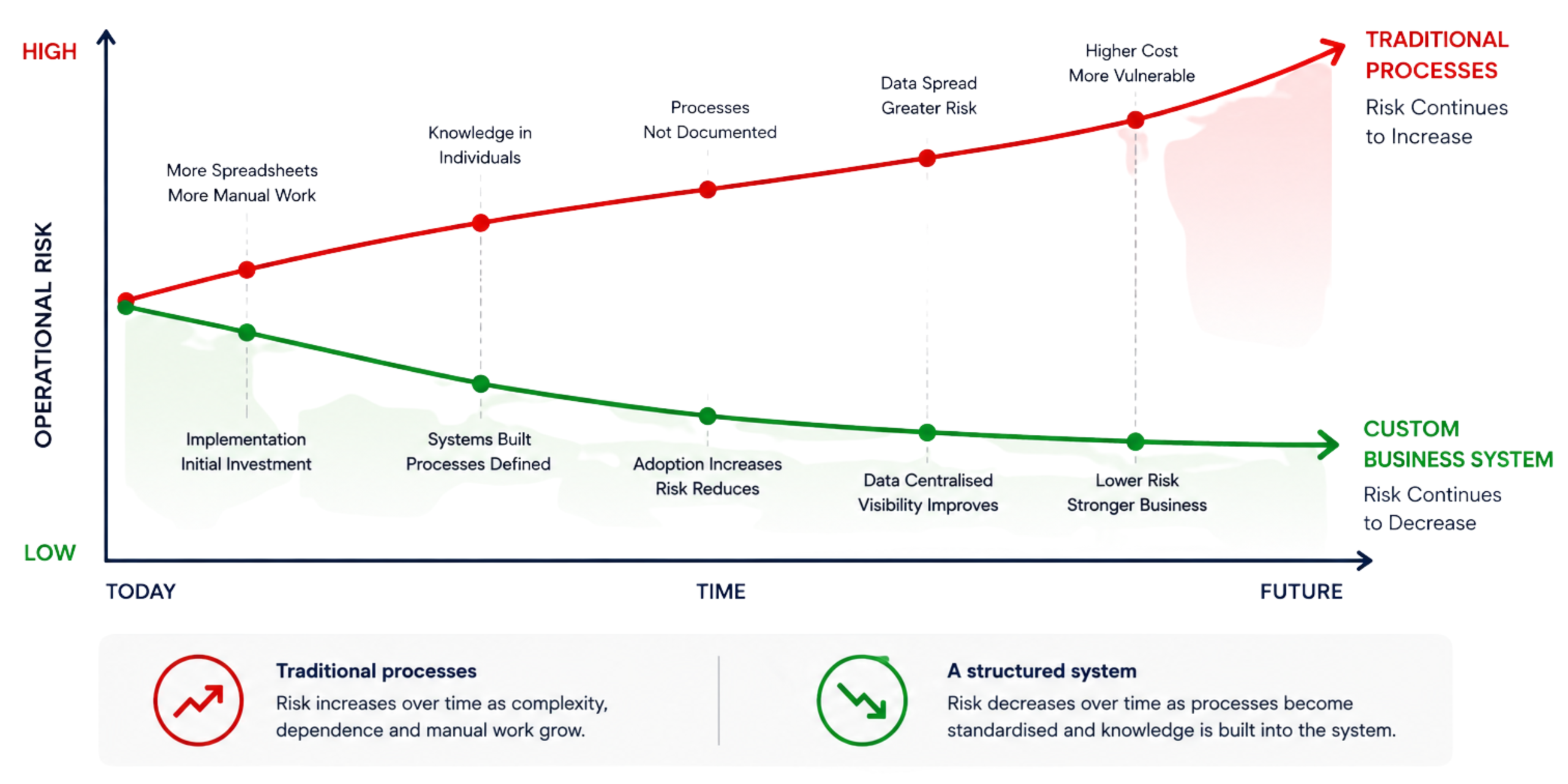
You Don't Know What You Know

The Real Cost Isn't the Software You Don't Have
- It’s the hidden cost of relying on outdated ways of working.
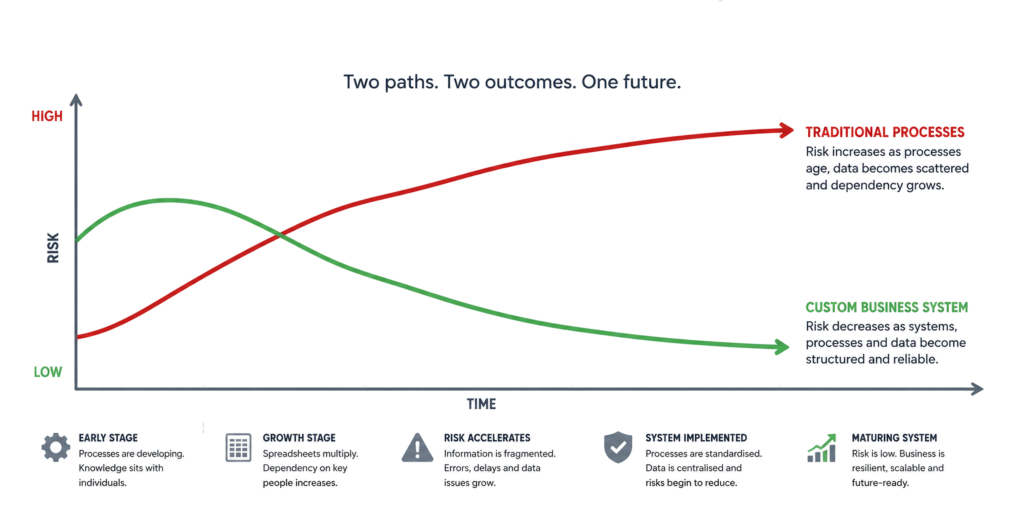
- When knowledge lives in people’s heads rather than inside your business, every holiday, illness, resignation or retirement increases operational risk.
- When data is spread across multiple spreadsheets, every manual update creates another opportunity for mistakes.
- When processes aren’t documented, consistency disappears.
None of these Issues Usually Cause Problems Overnight.
They Slowly Reduce Efficiency, Increase Costs and Make Growth Much Harder.
Data Protection
Automatic daily backups
Secure cloud hosting
Backup retention policies
Customer data export capability
Operational Control
Role-based permissions
Complete audit history
Standardised workflows
Process documentation
Business Continuity
Reduced reliance on key individuals
Easier staff onboarding
Modular architecture
Support handover capability
Documented database structure
Common Hidden Risks
Many business owners recognise these challenges:
- One employee knows how everything works
- Important information exists only in spreadsheets.
- Customer data is stored in several different places.
- Reporting relies on manual work.
- Processes vary depending on who’s doing the job.
- Nobody can see the full history of a customer or job.
- Changes aren’t recorded.
- Errors are difficult to trace.
- New staff take weeks or months to learn internal processes.
- Managers spend time chasing information instead of making decisions.
Individually, these problems seem manageable.
Together, they Create Significant Operational Risk.
A Well Designed Business System Changes Where the Risk Lives
The Goal isn’t Simply to Replace Paper or Spreadsheets.
- It’s to reduce dependency on people and make the business itself more resilient.
- Instead of relying on memory, information becomes part of the system.
- Instead of asking colleagues how something was done, the workflow guides users through each step.
- Instead of searching multiple locations for information, everything is available in one place.
The business becomes less dependent on individuals and more dependent on repeatable processes.